
Harrison Swift

IRS Payments Are Going Digital: What Overseas Taxpayers Need to Know

Tax

The IRS is modernising how it sends and receives money — and if you live outside the United States, you may be wondering what this means for tax refunds when you don’t have a US bank account.

In March 2025, the US government issued Executive Order 14247, aimed at reducing paper checks and moving federal payments to safer, faster electronic methods. The IRS has since released guidance explaining how this applies to tax payments and refunds.

Here’s what overseas taxpayers really need to know — in plain English.

What Is Changing?

The US government is moving away from paper checks and towards electronic payments, including:

  • Direct deposit for tax refunds
  • Electronic payments when taxes are owed
  • Digital payment systems across federal agencies


Paper checks are more likely to be delayed, lost, stolen, or altered, so the goal is to improve security, speed, and efficiency.

For many US-based taxpayers, this change is straightforward. For overseas taxpayers, the situation is a little more nuanced.

The Key Issue for Overseas Taxpayers

At present:

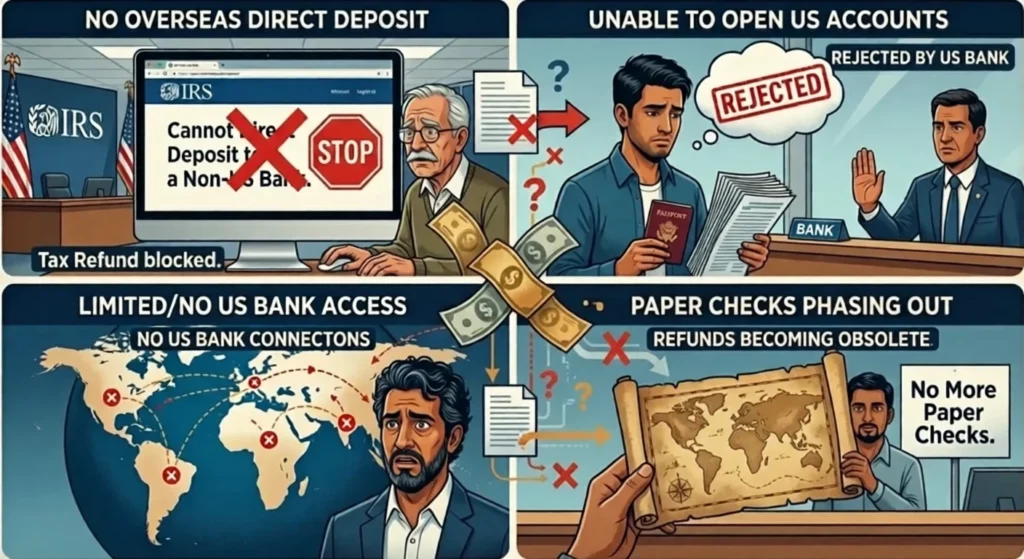
  • The IRS does not issue refunds to non-US bank accounts
  • Many non-US residents cannot open US bank accounts
  • Some taxpayers live in countries where US banking access is limited or unavailable


So the obvious question is:

If the IRS is moving away from paper checks, how do overseas taxpayers get their refunds?

IRS-overseas-taxpayer-challenges

Are Overseas Taxpayers Still Eligible for Refunds?

Yes — absolutely.

Overseas taxpayers are not excluded from IRS refunds under the new rules.

The IRS has confirmed that while electronic payments are becoming the default, exceptions will continue to apply where electronic payment is not feasible. Overseas taxpayers without access to US banking fall squarely into this category.

This means:

  • Refunds are still available
  • Filing requirements are unchanged
  • The IRS recognises that not everyone can go fully digital

How Overseas Taxpayers Can Receive IRS Refunds

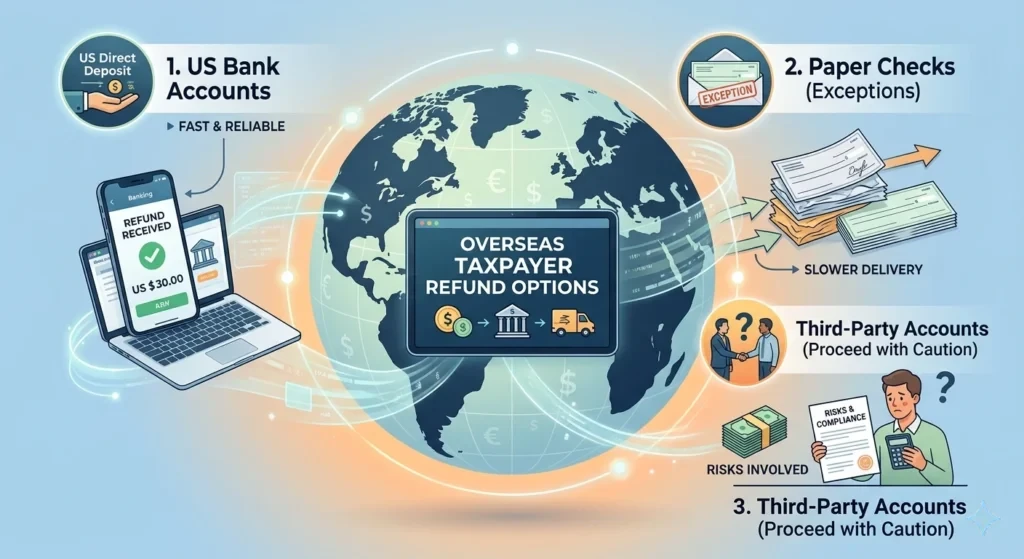
1. US Bank Accounts (Where Available)

If an overseas taxpayer has access to:

  • A US checking or savings account, or
  • A compliant US-based fintech account with a US routing and account number


Refunds can still be issued by direct deposit, which remains the fastest and most reliable option.

Nothing changes in this scenario.

2. Paper Checks Still Exist — But as an Exception

Despite the move toward digital payments, paper refund checks are not disappearing entirely.

For overseas taxpayers who genuinely cannot access US banking:

  • Paper checks are expected to remain available
  • They will be issued under exception rules, not as the default
  • Processing times may be longer than in the past


In practice, this means paper checks may continue, but taxpayers should expect:

  • Slower delivery
  • Greater scrutiny
  • Less predictability

3. Using Third-Party Accounts: Proceed Carefully

Some taxpayers consider routing refunds through:

  • A friend or family member’s US bank account
  • A third-party intermediary


This can create tax, reporting, and compliance risks, including:

  • Ownership disputes
  • Audit complications
  • FATCA or FBAR reporting issues


This approach should only be considered with professional advice.

Overseas-Taxpayer-Refund-Options

What About Paying the IRS From Overseas?

The good news: paying the IRS from overseas is already largely electronic, and this part is getting easier, not harder.

Most overseas taxpayers already use:

  • Electronic transfers
  • IRS-approved payment processors
  • International banking solutions


Executive Order 14247 does not introduce major new obstacles when it comes to paying US tax from abroad — the changes mainly affect refund delivery.

What Overseas Taxpayers Should Do Now

If you live outside the US and file US tax returns, it’s wise to plan ahead:

  • ✅ Set expectations around longer refund timelines
  • ✅ Explore legitimate US banking or fintech options where possible
  • ✅ Ensure tax filings are accurate to avoid refund delays
  • ✅ Document lack of US banking access if needed
  • ✅ Avoid informal workarounds that create compliance risks

The Bottom Line

For overseas taxpayers without US bank accounts:

  • You are not cut off from IRS refunds
  • You are not required to open a US bank account at all costs
  • Paper checks are likely to remain available under exceptions
  • Planning ahead matters more than ever


The IRS’s move toward electronic payments is about modernisation, not exclusion — but overseas taxpayers may need a more proactive approach than in the past.

Complex Cross-Border Tax Rules? We’re Here to Help

Share This :
Our Blog

Latest Blog & Articles